

Leadership Doesn’t Stay Behind the Scenes for Long
Olympic athletes train for years, knowing their performance will eventually be judged in a moment where everything is visible. There’s no separation between preparation and evaluation when the stakes are highest.
Leadership operates under similar conditions at senior levels. Decisions happen in environments where they’re observed, interpreted, and tied to outcomes in real time. What used to stay contained now moves across teams, stakeholders, and priorities that are constantly shifting.
Performance isn’t something reviewed after the fact anymore. It’s evaluated as it happens, often by people with different expectations and different definitions of success. That’s where performance visibility starts to shape how leadership is judged.
Visibility Removes the Margin for Inconsistency
Performance visibility doesn’t introduce new pressure. It removes the space where inconsistency can go unnoticed. In lower-visibility roles, uneven leadership decision-making can stay contained. A misstep in one situation doesn’t always carry forward. There’s room to adjust without broader impact.
As visibility increases, that margin disappears. Decisions are seen in sequence. Patterns form. Stakeholders start evaluating not just outcomes, but how those outcomes are produced. This is where performance visibility becomes a multiplier. It doesn’t change leadership capability, but it amplifies it. Consistency becomes more important because inconsistency becomes easier to detect.
What Is Seen Can Distort What Gets Rewarded
Performance visibility introduces a challenge most organizations don’t fully account for. The more leadership is evaluated in real time, the easier it becomes to reward what’s immediately visible, rather than what actually drives performance.
Some leadership behaviors naturally stand out in the moment. Communication in meetings, presence in discussions, and visible involvement in initiatives are easy to observe and quick to evaluate. They create a strong signal, especially in environments where decisions are being watched closely.
But many of the capabilities that drive sustained performance operate differently. Decision quality, judgment in complex situations, and the ability to align teams don’t always present themselves in a single moment. They show up in how decisions hold over time, how tradeoffs are made, and how consistently a leader moves an organization forward behind the scenes.
When evaluation leans too heavily on what’s visible, organizations start reinforcing incomplete signals. Leaders who are highly present can be perceived as more effective, while leaders doing the deeper, less visible work of driving performance may be under-recognized.
That’s where risk builds. Visibility doesn’t just increase exposure, it shapes what gets rewarded. Without grounding evaluation in measurable leadership competencies, organizations can unintentionally prioritize visibility over effectiveness.
Confidence Holds Attention. Alignment Holds Performance
Performance visibility increases the weight of every decision, not just in the moment, but across a sequence of outcomes that are continuously observed and evaluated.
That’s where a common misread happens. Confidence can perform well under visibility. It supports clear communication, strong presence, and the ability to act quickly when attention is high. Those signals are easy to see, and they often stand out early.
But visibility doesn’t stop at the moment. It accumulates. Decisions are seen in sequence, and patterns start to form. What holds up under that level of exposure isn’t confidence alone. It’s alignment.
Leadership alignment exists when leadership capability, role expectations, and decision responsibility are fully connected. It reflects how well a leader’s competencies match the actual demands of the role.
When alignment is off, visibility accelerates the breakdown. Decisions start to vary. Priorities shift. Direction loses consistency, and teams begin to question whether leadership holds under pressure.
When alignment is strong, visibility works differently. Decisions connect. Direction remains consistent even as conditions change. Over time, that consistency becomes one of the clearest indicators of leadership readiness.
Free download: Leads Courageously Playbook: The Science Behind Confident, Decisive Leadership
The Signals That Define Leadership Performance
As performance visibility increases, the signals that matter most aren’t always the ones that stand out immediately. They emerge through patterns tied to leadership competencies and performance.
- Decision-making consistency shows whether similar situations are handled with a clear and repeatable approach.
- Judgment under pressure reveals how leaders evaluate tradeoffs when stakes increase, and outcomes carry broader impact.
- Adaptability shows up in how direction shifts without creating confusion or instability.
- Learning agility becomes visible in how feedback is integrated into future decisions without constant course correction.
These indicators are directly tied to leadership capability. They don’t always stand out in a single moment, but they become clear as decisions accumulate. This is where performance visibility aligns with measurable leadership readiness.
Preparing Leaders Before Visibility Exposes the Gaps
Once leadership performance becomes fully visible, gaps don’t stay hidden for long. The problem is, most organizations still rely on that visibility to evaluate readiness after roles have already expanded.
By that point, expectations are higher, decisions carry broader impact, and the margin for error is smaller. What gets exposed isn’t a lack of potential. It’s a lack of alignment between leadership capability and the actual demands of the role.
Leaders are often promoted into positions where the required competencies operate at a different level, but readiness hasn’t been clearly defined or measured against those expectations. Visibility doesn’t create the gap. It reveals it.
Closing that gap requires more than observation. It requires a structured approach to defining what success looks like at the next level and measuring whether leaders are aligned to it before they step into it.
But measurement alone doesn’t translate into performance.
Leaders still have to operate in real time, under pressure, with decisions that are visible and consequential. That’s where executive leadership coaching becomes critical.
Coaching translates measured capability into consistent performance. It’s where leaders pressure test how they make decisions, how they prioritize, and how they operate when conditions are complex and highly visible.
It allows leaders to refine judgment, strengthen decision-making patterns, and align their approach to the expectations of the role before those expectations are tested at scale.
Without that layer, organizations rely on visibility to surface gaps after the fact. With it, they prepare leaders to perform before visibility amplifies the outcome.

Photo by Kampus Production: https://www.pexels.com/photo/women-in-blazers-working-in-an-office-8171202/
The Spotlight Reveals What’s Already There
Olympic competition doesn’t create an athlete’s ability. It reveals whether their preparation holds under pressure when every movement is visible.
Leadership works the same way. Performance visibility doesn’t build leadership capability. It exposes whether leadership competencies are aligned, consistent, and scalable over time.
Organizations that rely on observation alone end up reacting to gaps once they’re already exposed. Organizations that measure leadership readiness and reinforce it through structured development and coaching are able to prepare leaders before those gaps surface.
Elevate Executive Leadership Performance Before Visibility Does It for You
As leadership roles expand, performance visibility increases. Decisions carry broader impact, expectations become more complex, and leadership is evaluated in real time.
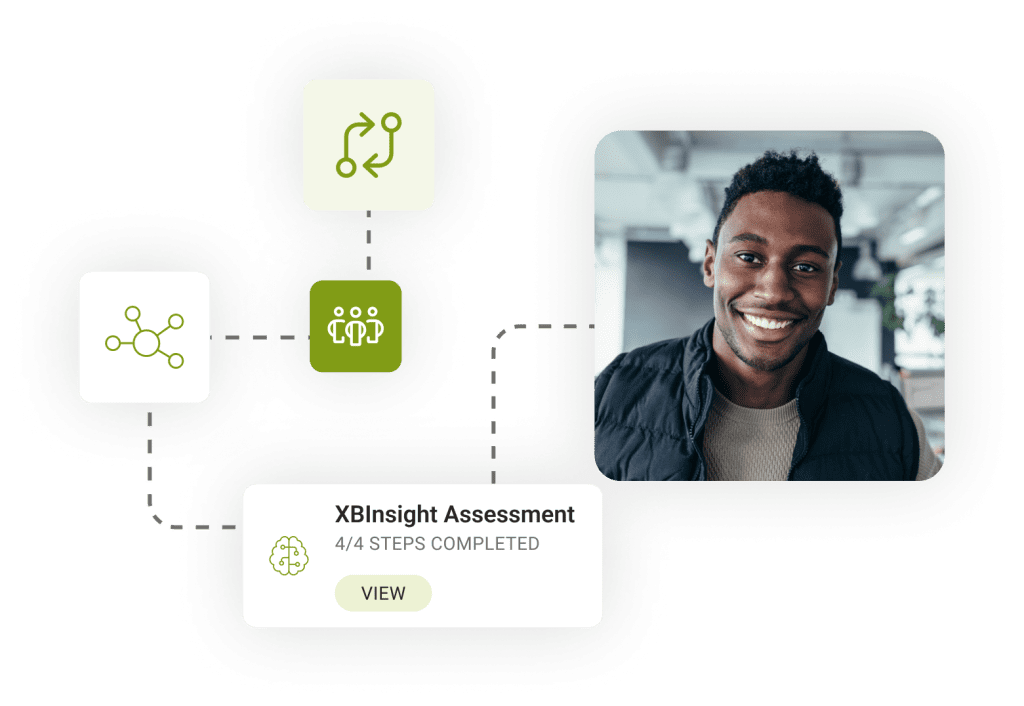
Preparing for that shift requires clear definitions of success, measurable leadership competencies, and alignment between leadership capability and role expectations.XBInsight helps organizations strengthen executive leadership performance through science-backed assessments, role-specific success profiles, and executive leadership coaching that prepares leaders to operate consistently under pressure. Connect with our team to build leadership readiness before performance visibility defines the outcome.