

Modern hiring is no longer about gut instinct alone. Data and AI are reshaping how organizations identify, evaluate, and select talent. The companies seeing the strongest results are using data-driven hiring to improve speed, accuracy, and consistency, while still relying on human judgment to interpret, contextualize, and make final decisions. The balance between technology and human insight is what leads to smarter, fairer, and more effective hiring outcomes.
What Is Data-Driven Hiring and Why Is It Gaining Ground?
Data-driven hiring uses analytics, AI in recruiting, and structured assessments to guide hiring decisions. Instead of relying on resumes and unstructured interviews alone, organizations are incorporating tools that evaluate candidates based on measurable factors tied to job performance.
This includes:
- Predictive analytics to identify traits linked to success
- AI screening tools to sort and rank candidates
- Assessment platforms that measure candidate performance, job fit, and competencies using structured data for consistent comparison against job criteria
The shift toward data-driven hiring reflects a broader need for precision. As roles become more complex and hiring decisions carry greater impact, organizations are looking for ways to reduce uncertainty and improve how they identify top talent.
The benefits are showing up quickly:
- Faster hiring cycles with more efficient screening
- Better candidate-job alignment through role-specific insights
- More consistent evaluation across candidates
- Reduced reliance on subjective decision-making
This approach strengthens human judgment by providing a clearer foundation for decision-making.
Where Does Technology Add the Most Value in Hiring?
AI in recruiting is most effective when it’s applied to areas that benefit from scale, pattern recognition, and consistency.
Screening and Ranking Candidates
Technology can quickly analyze large volumes of applicants and identify candidates whose experience, skills, and capabilities align with the role. This reduces the manual effort required to review resumes and helps hiring teams focus their time on the most relevant candidates.
Identifying Patterns in High Performers
Predictive hiring models use data from top-performing employees to identify patterns that correlate with success. AI can surface these patterns quickly across large datasets. Science ensures those patterns are valid, relevant to the role, and predictive of real performance over time.
Creating More Consistent Early-Stage Evaluation
Structured screening reduces variability in how candidates are assessed at the beginning of the process. By applying the same criteria across all applicants, organizations create a more consistent starting point for evaluation.
Supporting Bias Reduction
When designed and monitored correctly, AI tools can minimize the influence of unconscious bias in early-stage decisions. By focusing on job-relevant data, these tools shift attention toward measurable qualifications and competencies.
Technology performs best when it’s used to bring clarity, consistency, and efficiency to the process.
Where Does Human Judgment Still Matter Most?
Even the most advanced AI systems don’t replace the need for human judgment. They provide signals. People interpret those signals and apply them in context.
Interviews and Contextual Evaluation
Interviews allow hiring teams to explore how candidates think, communicate, and respond in real situations. This adds depth that data alone can’t capture. It also allows organizations to evaluate how candidates align with team dynamics and organizational priorities.
Interpreting Data in Context
AI can highlight patterns and flag strong candidates, but it doesn’t fully understand the nuances of a role, a team, or a specific business challenge. Human judgment is what connects data to real-world application.
Applying Experience and Domain Knowledge
Experienced hiring managers bring perspective that can’t be replicated by algorithms. They understand what success looks like in practice, how roles evolve over time, and how candidates may grow within the organization.
Assessing Long-Term Fit
Hiring decisions extend beyond immediate qualifications. Leaders need to consider adaptability, growth potential, and alignment with future needs. These decisions require a broader view that combines data with experience.
Human judgment ensures that hiring decisions remain thoughtful, relevant, and aligned with the organization’s goals.
How Can Organizations Effectively Blend AI and Human Insight?
The strongest hiring strategies don’t treat AI and human judgment as separate approaches. They integrate both into a structured, repeatable process.
Use Structured Interviews Informed by Data
Interview questions can be designed to directly align with the skills and competencies most important to the job, ensuring a stronger connection between evaluation criteria and role requirements.
Continuously Calibrate AI Tools
AI models improve over time, but only when they are monitored and adjusted. Organizations should regularly review outcomes to ensure that tools remain accurate, fair, and aligned with current business needs. AI can identify trends across candidates and outcomes, but without a scientific framework, those trends can be misleading or incomplete. Science validates what actually drives success in a role, ensuring that hiring decisions are grounded in factors that are both measurable and predictive.
Involve Managers and Teams in Final Decisions
Hiring decisions benefit from multiple perspectives. Including team members and stakeholders in the final stages ensures that decisions reflect both data insights and real-world considerations.
Track Outcomes and Refine the Approach
Data-driven hiring doesn’t end at the offer stage. Organizations should track performance, retention, and engagement to understand how hiring decisions are translating into results. These insights can inform how you refine the process.
When AI and human judgment are aligned, hiring becomes more precise, more consistent, and more adaptable over time.
What Does This Mean for the Future of Talent Optimization?
Data-driven hiring is becoming a core part of talent optimization. Organizations that invest in this approach are building stronger pipelines, improving hiring outcomes, and creating a more consistent experience for candidates and hiring teams.
The combination of predictive hiring tools and human insight allows organizations to:
- Identify high-potential talent with greater accuracy
- Make faster, more confident hiring decisions
- Improve long-term alignment between employees and roles
- Build a more scalable and repeatable hiring process
As hiring continues to evolve, the advantage will go to organizations that can use data effectively without losing the value of human judgment.
Turning Hiring Insight into Hiring Confidence with XBInsight
Hiring decisions shape everything that follows, from team performance to long-term growth. When those decisions are supported by both data and experience, organizations gain a clearer understanding of what success looks like and how to replicate it.
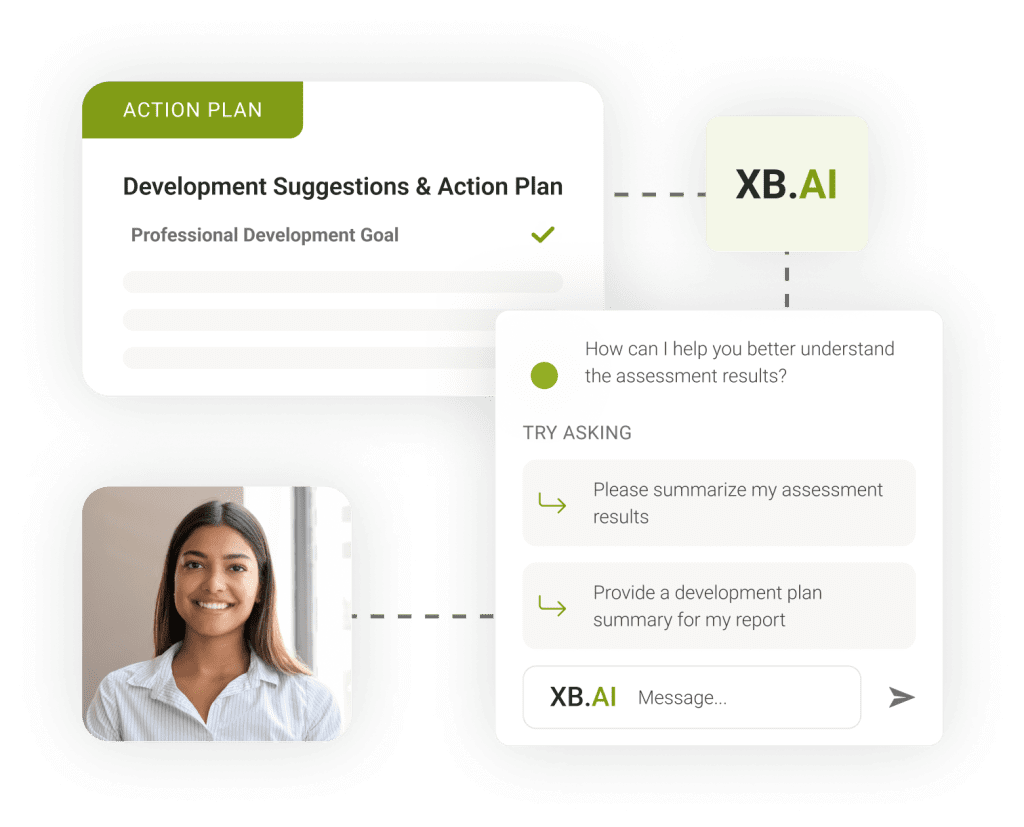
XBInsight brings this approach together by combining AI-driven insights with scientifically validated assessments to support data-driven hiring across the entire talent lifecycle. From identifying the right candidates to developing and retaining top talent, this approach helps organizations move from reactive hiring to a more strategic, predictive model.When technology and human judgment work together, hiring becomes more than an HR process. It becomes a competitive advantage. When hiring decisions are grounded in both data and experience, organizations move with greater clarity and confidence. XBInsight brings that structure together, helping teams define success, evaluate candidates consistently, and make more informed talent decisions across the lifecycle. Ask us about seeing a demo.