
Succession planning has always carried weight. It’s where organizations decide who’s ready to step into critical roles and who needs more time, experience, or development before they get there. The problem is that for many companies, those decisions are still shaped more by perception than proof.
Most succession plans start with good intentions. Leaders look at performance history, manager recommendations, and tenure. They discuss potential in meetings and try to forecast who might succeed in a future role. But without a structured, science-backed approach, those conversations can quickly become subjective. And subjectivity is where risk enters the picture.
As organizations grow more complex and leadership roles continue to evolve, succession planning needs more than instinct. It needs data. And it needs science.
The Limits of Traditional Succession Planning
Traditional succession planning often relies on what leaders can see. They can identify who performs well today. Who speaks confidently in meetings. Who’s been around long enough to feel “ready.” These signals aren’t meaningless. Instinct in business is valid. However, these visible cues are incomplete. They paint only part of a candidate’s true potential.
In many organizations, succession decisions are also shaped by data that feels objective but doesn’t fully reflect leadership readiness. Executives may look to performance KPIs like sales results, revenue growth, utilization rates, or departmental outcomes as evidence of potential. Those metrics absolutely matter. They contribute to the big picture of an employee’s impact and track record.
What they don’t reveal is how someone performs when the context changes.
KPIs can’t show whether an individual makes sound decisions under pressure, applies judgment in unfamiliar situations, or navigates complex negotiations where outcomes aren’t clearly defined. They don’t capture how someone balances competing priorities, adapts when assumptions fall apart, or leads through ambiguity. As a result, organizations can feel data-driven while still missing critical indicators of future leadership success.
The State of Succession Planning
This gap between intention and insight shows up clearly in practice. According to SHRM, 42% of talent management executives say succession strategy is a top focus for 2026, yet only 22% of organizations reported having a formal succession plan in place in 2025. Adoption varies widely by size, from just 16% among smaller organizations to 44% among extra-large enterprises. The takeaway isn’t a lack of awareness. It’s that many organizations recognize the importance of succession planning but lack the tools and data needed to operationalize it consistently.
Performance in a current role doesn’t always translate to readiness for a future one. Visibility doesn’t equal capability, and confidence doesn’t guarantee sound decision-making under pressure. When succession planning depends too heavily on these surface indicators, organizations risk promoting people before they’re ready. Or worse yet, stakeholders overlook high-potential talent that hasn’t had the right exposure.
Over time, this creates familiar problems. Leadership transitions feel disruptive, and development plans miss the mark. Promising talent with your teams start to disengage or leave because they don’t see a clear path forward. None of this happens because leaders aren’t trying. It happens because the tools used to guide these decisions aren’t designed for prediction.
What Changes When Science Enters the Process
Data-driven succession planning with predictive assessments shifts the conversation from opinion to insight. Instead of asking who seems ready, organizations can define what readiness actually looks like for each role and measure against it consistently.
Science-backed, predictive assessments make this possible. These tools evaluate multiple dimensions that are directly tied to future role success, including how individuals approach decisions, adapt to complexity, and stay motivated as responsibilities increase. The focus isn’t on personality labels. It’s on job-relevant indicators that predict performance in real-world leadership and specialized roles.
When succession planning is grounded in validated data, leaders gain clarity. They can see where potential exists, where gaps remain, and what development is needed before a transition makes sense. That clarity removes guesswork and replaces it with confidence.
From Potential to Readiness
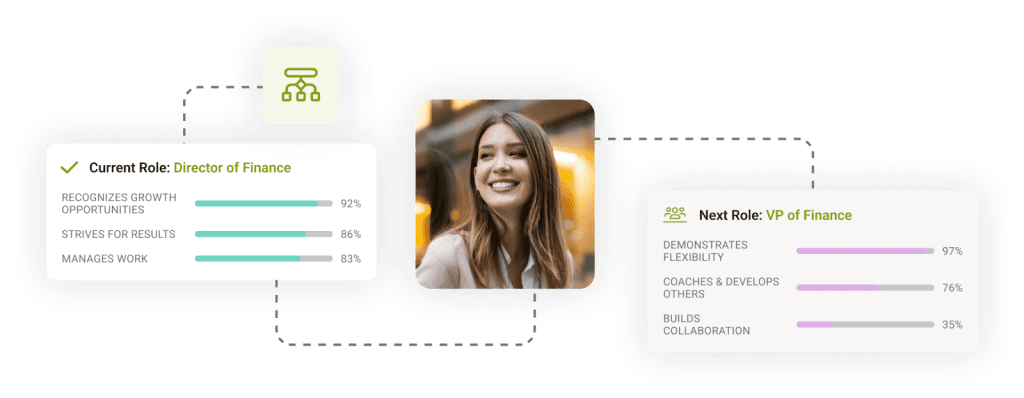
One of the most important shifts data brings to succession planning is the ability to distinguish potential from readiness. Those traditional data insights and performance metrics are good at identifying strong contributors. Fewer are equipped to assess whether those contributors are prepared for what comes next.
Predictive assessments help close that gap. By aligning success profiles to each role, organizations can benchmark candidates against the competencies, critical thinking skills, relevant experience, and values alignment required to succeed at the next level. This makes development planning more targeted and promotion decisions more defensible.
Instead of broad development programs or generic leadership tracks, leaders can invest in growth areas that directly support future readiness. Employees benefit, too. They receive clearer feedback, more relevant development opportunities, and a better understanding of what success looks like beyond their current role.
Reducing Bias and Improving Fit
Succession planning is also where bias can inadvertently influence outcomes. When decisions rely heavily on subjective input, unconscious preferences can shape who gets seen as “ready” and who doesn’t. Over time, this can limit diversity, weaken bench strength, and erode trust in the process.
A data-driven approach brings consistency to evaluation. Everyone is assessed against the same role-specific criteria. Everyone is evaluated using the same clearly defined, role-specific criteria to ensure fairness and consistency.This structure helps organizations make fairer, more transparent succession decisions while still allowing room for leadership judgment.
This leads to a better alignment between the individual and the role. Leaders are promoted because their capabilities align with future demands, not because they resemble past leaders or fit a familiar mold. That alignment reduces disruption during transitions and increases retention among high-potential employees who see a clear, credible path forward.
Succession as an Ongoing Leadership Strategy
Perhaps the most important shift is how succession planning is viewed. In a data- and science-driven model, it’s no longer a once-a-year exercise or a document prepared for the board. It’s an ongoing strategy that evolves as roles change, business priorities shift, and new leadership demands emerge.
With real-time visibility into talent pipelines, organizations can plan proactively rather than reactively. They can model different scenarios, assess readiness across functions and geographies, and ensure critical roles are never left exposed. Leadership transitions become smoother because they’re anticipated, not rushed.
This approach also strengthens retention. When employees understand how readiness is evaluated and how development decisions are made, trust increases. Future leaders stay engaged because they can see how their growth connects to real opportunities.
Why Data-Driven Succession Planning Is the Future
Leadership roles are becoming more complex, not less. Expectations around decision-making, adaptability, and alignment with organizational values continue to rise. Succession planning must keep pace.
Data-driven succession planning means proactively measuring human judgment as a skill. It’s about supporting those next-level traits with insight that holds up under scrutiny. When science-backed assessments are used alongside experience and performance data, organizations make smarter, more confident decisions about who is ready to lead and when.
The future of succession planning belongs to organizations that treat leadership readiness as a measurable discipline. One grounded in data. In science. And in a clear understanding of what success truly requires.
Ready to Bring More Confidence to Your Succession Strategy?
Succession planning doesn’t have to rely on assumptions or static plans. With the right data and science-backed insight, organizations can build leadership pipelines that are clear, fair, and prepared for what’s next.
If you’re ready to move beyond subjective succession decisions and create a future-ready talent strategy, we’d welcome the conversation.
Contact XBInsight to learn how science-backed, predictive insights can support confident leadership transitions across your organization.