
Most hiring mistakes don’t happen because organizations lack qualified candidates. They happen because qualifications and performance are not the same thing.
A candidate may have the right experience, education, industry background, and interview presence, yet still struggle to perform once they’re in the role. Another candidate may have a less conventional resume but quickly becomes a top performer. That’s the challenge hiring teams face every day. Resumes help explain where someone has been. Interviews provide a snapshot of how someone presents themselves. Neither reliably predicts how someone will perform after they’re hired.
Hiring confidence improves when organizations move beyond credentials and begin measuring the factors most closely connected to performance. Understanding role fit allows companies to evaluate how well an individual’s competencies, tendencies, and strengths align with the realities of a specific position before a hiring decision is ever made.
Why Do Qualified Candidates Sometimes Underperform?
Most hiring processes are designed to identify capability. The assumption is straightforward: if a candidate possesses the right experience and qualifications, strong performance should follow.
In reality, performance is influenced by much more than capability alone.
Every role places unique demands on the individual performing it. A sales professional may need persistence, influence, and resilience. A customer service leader may require empathy, communication, and problem-solving. An operations manager may thrive because of decision-making, adaptability, and attention to detail. Success often depends on whether the individual’s strengths align with the requirements of the role itself.
This helps explain why two candidates with similar backgrounds can produce dramatically different outcomes once hired. One naturally aligns with the role. The other spends much of their time working against it.
What Does Role Fit Actually Measure?
Role fit is often misunderstood as a culture or personality conversation. While those factors can influence employee experience, performance-based role fit focuses on something much more practical: the characteristics that contribute to success within a specific job.
The strongest hiring decisions begin with understanding what top performers actually have in common. Which competencies consistently appear among high performers? How do successful employees approach decisions, solve problems, adapt to change, communicate, and learn? What behaviors contribute to stronger results over time?
Once those variables are identified, hiring teams gain a clearer framework for evaluating candidates. Rather than relying solely on resumes, interviews, or intuition, organizations can compare candidates against measurable indicators that have already demonstrated a connection to performance.
Why Are Traditional Hiring Methods Missing Part of the Picture?
Interviews remain one of the most widely used hiring tools, yet they often provide limited visibility into future performance. Candidates are typically evaluated during a relatively short interaction, and hiring managers are expected to make significant decisions based on a combination of resumes, references, interview impressions, and prior experience.
Those inputs are valuable, but they frequently leave unanswered questions.
- How quickly will this person adapt to the role?
- How do they respond when priorities shift?
- How do they make decisions?
- What motivates their performance?
- How closely do their strengths align with the demands of the position?
Without deeper insight into these areas, hiring decisions often depend on assumptions. That’s one reason organizations continue to experience turnover, underperformance, and disappointing hiring outcomes even when candidates appear highly qualified on paper.
How Does Performance-Based Hiring Improve Confidence?
Confidence increases when hiring decisions are supported by data tied directly to success within the role.
Instead of evaluating candidates against broad expectations, organizations can evaluate them against role-specific benchmarks grounded in real performance outcomes. Hiring managers gain a better understanding of where a candidate is likely to excel, where support may be needed, and how closely that individual aligns with the factors that contribute to success.
The result is a more objective hiring process, greater consistency across hiring decisions, and reduced risk when filling critical positions.
Most importantly, hiring conversations become more strategic. Teams spend less time debating impressions and more time evaluating measurable indicators that support long-term performance.
Why Does XBInsight Measure Both Fit and Performance?
Many assessments focus primarily on competencies. While competency measurement is important, it only tells part of the story.
At XBInsight, we believe organizations need visibility into both fit and performance potential.
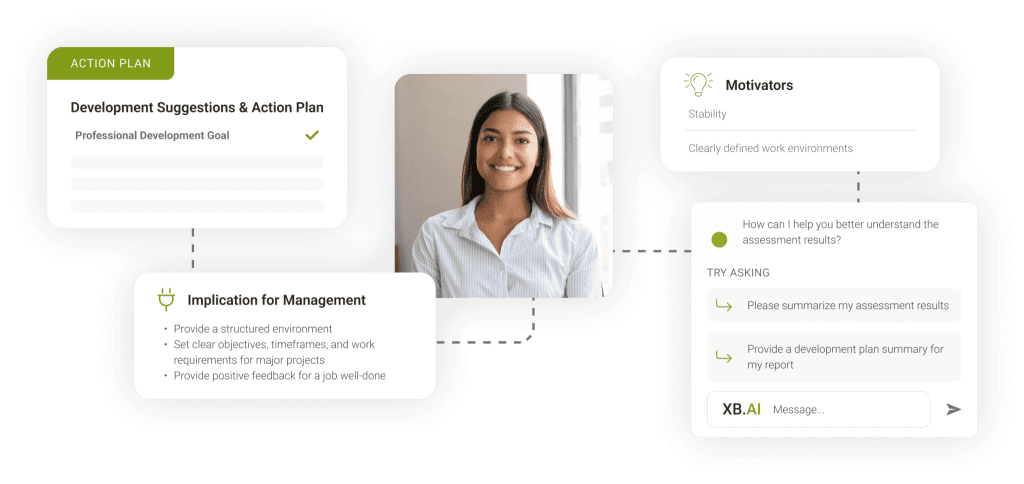
Our AI + Science-powered Talent Intelligence Platform combines scientifically validated assessments, Industrial-Organizational Psychology, workforce data, and role-specific performance benchmarks to identify the variables most closely associated with success. Rather than evaluating candidates against generic standards, we measure how closely individuals align with the requirements of a specific role and how those characteristics connect to future performance outcomes.
This approach helps organizations answer a far more valuable question than simply whether a candidate appears qualified. It helps answer whether that candidate is positioned to succeed.
What Happens When Organizations Measure the Right Variables?
The strongest hiring decisions occur when organizations understand what drives success before a candidate is hired.
When role-specific competencies, performance indicators, and predictive insights become part of the hiring process, talent decisions become more informed and more consistent. Organizations reduce uncertainty, improve hiring confidence, and strengthen workforce performance over time.
That advantage becomes increasingly important as competition for talent continues to grow.
The organizations that consistently build high-performing teams are rarely guessing. They understand what success looks like, they measure the variables that contribute to it, and they use data to support decisions that have a lasting impact on business results.
XBInsight helps organizations identify, assess, and develop talent through AI + Science-powered assessments backed by more than 20 years of Industrial-Organizational Psychology research and validated workforce data. By measuring both role fit and performance potential, organizations gain deeper insight into hiring decisions and greater confidence in the talent they bring into the business.
Interested in seeing how performance-based hiring works? Request a demo and discover how XBInsight helps organizations predict fit and performance before day one.