

Executive careers rarely unfold in a straight line. Few leaders can predict exactly which opportunities, challenges, acquisitions, market shifts, or organizational changes will shape the next phase of their professional journey. Yet the most successful executives don’t simply react to those moments as they occur. They prepare for them long before they arrive.
That’s where coaching takes on a different role.
At its best, executive coaching isn’t simply about solving today’s challenges or improving performance in a current position. It becomes a form of career architecture: a deliberate process for building the competencies, experiences, and leadership capabilities that support long-term growth. Rather than focusing exclusively on the next promotion or title, career architecture helps leaders develop the foundation needed to succeed through multiple stages of leadership complexity.
Why Career Growth Requires More Than Career Planning
Traditional career planning often focuses on identifying the next role and outlining the steps required to reach it. While that approach can be useful, it assumes leadership growth follows a predictable path.
Executive leadership rarely works that way.
A senior leader may inherit a larger team, take responsibility for a new business unit, lead through a transformation initiative, enter a new market, or navigate an acquisition. In many cases, the most significant leadership opportunities are ones that could not have been anticipated years in advance.
The executives who thrive in these situations typically share one characteristic: they have invested in developing capabilities that extend beyond their current role. They have strengthened decision-making, expanded strategic thinking, increased their ability to influence across stakeholder groups, and built the adaptability required to lead through uncertainty. Those skills create flexibility, allowing leaders to succeed even when the path ahead looks different than expected.
The Most Important Leadership Investment Is Future Capability
Many executives spend considerable time evaluating business performance, operational priorities, and growth opportunities. Far fewer spend the same amount of time evaluating their own future leadership requirements.
The reality is that every leadership role places different demands on the individual occupying it. The competencies that support success as a functional leader may not be the same competencies required to lead an enterprise-wide initiative. The skills that help someone manage a team of fifty people may not be sufficient when leading a global organization, guiding a board relationship, or overseeing significant business transformation.
Career architecture requires leaders to look beyond current responsibilities and ask a different set of questions:
- Which competencies will become more important as my responsibilities expand?
- What leadership capabilities will future roles require?
- Where are my greatest opportunities for growth?
- Which strengths should I continue building?
- What experiences will best prepare me for what’s next?
These questions shift the focus from career movement to leadership capability. That’s often where the most meaningful growth occurs.
Why Executive Coaching Works Best Before a Major Transition
Many leaders engage a coach after accepting a new role, facing a significant challenge, or navigating a period of uncertainty. Coaching can absolutely provide value during those moments, but some of the strongest development outcomes occur before a transition takes place.
The most effective executives don’t wait until a competency becomes critical before developing it. They invest in growth early, creating a stronger foundation before greater complexity arrives.
This proactive approach allows leaders to strengthen capabilities over time rather than under pressure. It creates opportunities for reflection, targeted development, and intentional growth while the stakes are lower and the learning process can be more deliberate. By the time larger responsibilities arrive, the executive has already begun building the competencies needed to succeed.
Viewed through this lens, coaching becomes less about solving problems and more about preparing for future opportunities.
The Strongest Executive Growth Plans Are Built Around Competencies
Titles don’t predict future success. Tenure doesn’t predict future success. Visibility within an organization doesn’t predict future success.
Competencies provide a much clearer picture.
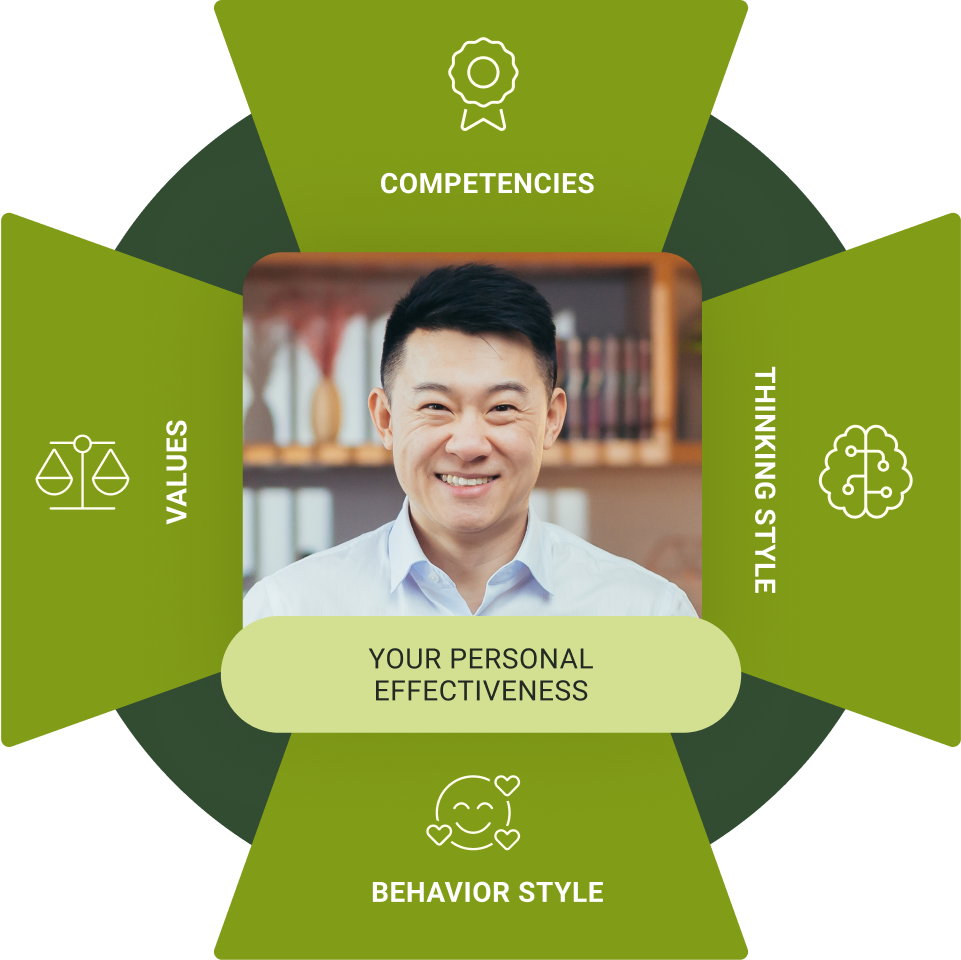
Executive growth becomes easier to understand when leaders focus on the capabilities most closely associated with long-term effectiveness. Decision-making, strategic thinking, leadership influence, adaptability, communication, and the ability to lead through change often become increasingly important as responsibilities expand.
The challenge is that many development efforts remain too broad to produce meaningful insight. Generic leadership advice can be difficult to apply because it doesn’t account for the realities of a specific role, industry, or leadership environment.
This is where role-specific development becomes especially valuable. Growth looks different for a healthcare executive than it does for a sales leader, operations executive, or emerging enterprise leader. Understanding which competencies matter most within a particular leadership context creates a more focused and effective path for development.
AI + Science Creates a More Intentional Growth Path
Executive coaching has traditionally relied heavily on experience, observation, and conversation. Those elements remain important, but today’s leaders have access to deeper insights than ever before.
By combining AI, Industrial-Organizational Psychology, scientifically validated assessments, and workforce data, leadership development can become significantly more personalized and precise. Leaders gain visibility into their strengths, development opportunities, leadership tendencies, and competency growth over time.
Perhaps most importantly, they gain a clearer understanding of how their current capabilities align with future leadership goals.
Rather than relying on assumptions about readiness or potential, executives can use measurable insights to guide development decisions. Coaching becomes more focused. Growth plans become more targeted. Progress becomes easier to evaluate.
Career architecture is most effective when leaders understand not only where they want to go, but also what capabilities will help them get there.
Designing Leadership Growth With Greater Intention
The strongest executive careers are rarely built through chance alone. They are shaped through intentional development, continuous learning, and a willingness to invest in future capability long before it becomes necessary.
As leadership responsibilities continue to evolve, executives need more than general development advice. They need a clear understanding of the competencies that drive success, the opportunities that will accelerate growth, and the development strategies that will prepare them for future challenges.
XBInsight Executive & Leadership Coaching combines AI + Science-powered assessments, personalized coaching, and role-specific benchmarks to help leaders design more intentional growth trajectories. Through measurable insights, competency-based development, and personalized growth plans, executives gain greater clarity around where they are today, where they want to go, and how to build the capabilities required to get there.
Interested in taking a more intentional approach to executive growth? Request three complimentary Leadership Development Assessments and discover how AI + Science can help you build a stronger leadership foundation for the opportunities ahead.