

Tenure tells you how long an employee has been with an organization or in a role. Over that time, they may have developed valuable institutional knowledge, experience, relationships, and industry expertise. What tenure can’t tell you on its own is how someone will perform when the job becomes bigger.
That distinction becomes critical when organizations are deciding who should move into leadership roles. A long track record may make someone an obvious candidate for advancement, particularly when they know the business inside and out. Yet the next leadership level may introduce demands they haven’t encountered in their current position, including greater ambiguity, broader influence, more complex decisions, and accountability for outcomes beyond their own work.
For organizations building leadership pipelines, years of service provide context. Decisions about advancement require evidence of how someone is equipped to handle greater leadership demands.
Experience Has Value, but It Doesn’t Tell the Whole Story
Experienced employees may understand customers, internal processes, organizational history, and industry dynamics in ways that take years to develop. They may also have relationships and credibility that make them highly valuable contributors and leaders.
The problem arises when time itself becomes evidence of leadership readiness.
Five years of experience can represent five years of increasing responsibility, deliberate development, and exposure to difficult business challenges. It can also represent five years spent performing essentially the same responsibilities. Years of experience alone don’t reveal how much an employee’s responsibilities, capabilities, and exposure to new challenges have grown during that time.
This is why leadership decisions benefit from looking at what happened during those years. Did the individual expand their capabilities? How did they respond when priorities changed? Have they learned from increasingly difficult assignments? Can they apply what they’ve learned when the situation is unfamiliar?
Leadership Changes the Nature of the Work
Many promotion decisions involve a significant change in what success looks like.
An accomplished individual contributor may have built a career around deep technical expertise and personal execution. As a manager, success increasingly depends on setting direction, developing others, delegating effectively, and producing results through a team.
The shift continues as leaders advance. Broader roles can require stronger business judgment, greater financial acumen, cross-functional influence, strategic decision-making, and the ability to balance priorities that don’t have an obvious answer.
Time spent at the previous level doesn’t automatically develop those capabilities. Leaders need opportunities to practice them, feedback that helps them improve, and experiences that stretch how they think and operate.
Career history provides useful context for succession planning, while talent data can add evidence about the capabilities an employee demonstrates as leadership demands increase.
Watch for the “They’ve Earned It” Promotion
Tenure can introduce an emotional dimension to promotion decisions. Long-tenured employees may enter promotion conversations with considerable organizational knowledge, demonstrated contributions, and established credibility. Those factors can make them strong candidates for consideration.
They can also influence how advancement is discussed. Years of contribution deserve recognition, and organizations have good reason to create meaningful career paths for employees who have invested in the business. Promotion decisions, however, also carry responsibilities to the individual, the team they’ll lead, and the business outcomes they’ll own.
Promotion decisions benefit from examining the requirements of the future role alongside an employee’s history of contribution.
If gaps exist, identifying them gives the organization an opportunity to provide targeted development, broader exposure, coaching, or stretch assignments before increasing the person’s scope. Employees also gain clearer expectations for advancement and a more specific understanding of the capabilities they need to build.
Look at How People Respond to Greater Complexity
Experience becomes particularly valuable when people can apply what they’ve learned to situations they haven’t encountered before.
Broader leadership roles can involve ambiguity, competing priorities, complex problems, and decisions that cut across functions and stakeholders. Giving emerging leaders exposure to those conditions can help organizations build relevant experience while observing how they operate as complexity increases.
Someone with fewer years in an organization may demonstrate the ability to progress quickly when given unfamiliar challenges. Someone with much deeper experience may bring an extraordinary knowledge base while still needing development in areas required for broader leadership. Tenure alone provides little visibility into those differences.
Stretch assignments, cross-functional projects, increased decision-making responsibility, and exposure to senior stakeholders can provide valuable development experiences. They can also give organizations additional evidence of how employees respond as expectations, visibility, and complexity increase.
Give Succession Planning a Clearer View of the Bench
When tenure becomes one of the signals considered in succession planning, it needs context from other talent data.
A succession slate may include several experienced, accomplished employees while leaving important questions unanswered. How would each candidate respond to greater complexity? Can they influence beyond their current team or function? Are they prepared for increased accountability? Where would focused development improve their readiness?
Stronger talent data can put those questions at the center of succession discussions.
Consistent talent data can also help organizations evaluate employees across different career paths and levels of experience. That broader visibility can support internal mobility and give leaders a clearer understanding of the talent available across the business, including employees whose tenure may not immediately place them at the top of a traditional succession list.
Bring More Evidence Into Promotion Decisions
XBInsight has spent more than 20 years applying I/O Psychology, workforce data, and scientifically validated assessments to help organizations understand talent and make informed workforce decisions.
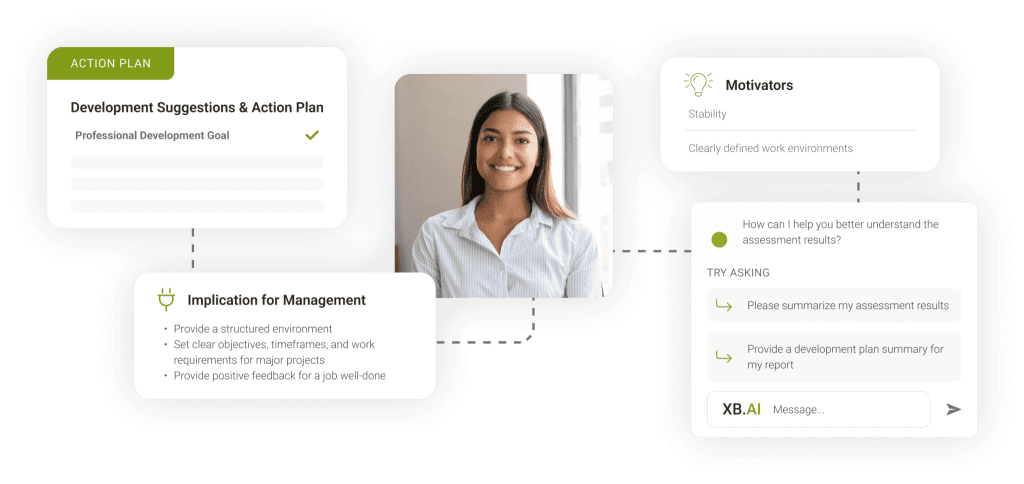
The XBInsight Leadership Readiness & Promotability Report builds on that expertise with an expanded solution designed to support succession and promotion decisions. It assesses leadership readiness across three core dimensions: Skill, including the competencies required to succeed at the next level; Will, reflecting the motivation to take on greater responsibility, influence, visibility, and accountability; and Ability, encompassing the capacity to navigate increased complexity and scale.
The report also provides insight into fit and potential derailers, along with development guidance based on the individual’s results. These insights can inform promotion conversations alongside performance, role-specific experience, business needs, and organizational timing.
For a long-tenured employee, that information can add important context to years of demonstrated contribution. For an emerging leader with a shorter track record, it can provide evidence of capabilities that tenure alone may not reveal.
Build Leadership Pipelines Around Growth
Years of experience will always be part of the talent picture. The greater opportunity is understanding what people have built through that experience and how prepared they are to apply it at a higher level.
When tenure is considered alongside evidence of capability and readiness, promotion conversations become more useful for the employee and the organization. Leaders have clearer information for deciding where to invest in development, where additional experience may be needed, and how talent could progress within the business.
XBInsight brings AI + Science together to help organizations make those decisions using talent intelligence grounded in decades of research and workforce data. With better insight into capability, growth, and readiness, organizations can build leadership pipelines around the people prepared to carry the business forward.
Ready to strengthen your leadership pipeline with better talent intelligence? Start your free trial or request an XBInsight demo today.