No organization can predict exactly what its business will look like five years from now, or even what new challenges may emerge over the next twelve months. Technology is changing how people work, new business priorities can take shape quickly, and leaders are often making decisions in situations they haven’t encountered before. Preparing for what’s next means having people who can learn as they go, adjust when circumstances change, and keep moving the business forward.
The question isn’t whether change will happen. It’s whether the workforce is prepared to navigate it successfully.
Future-ready organizations don’t build resilience by reacting after disruption occurs. They invest in understanding which employees can absorb new information, adapt their approach, solve unfamiliar problems, and continue delivering results as business conditions evolve. Learning agility provides valuable insight into that capability, giving leaders a stronger foundation for workforce planning, leadership development, and long-term organizational growth.
Future-Proofing Begins with People
Organizations often associate future-proofing with technology investments, digital transformation, or operational modernization. Those initiatives certainly influence competitiveness, but every transformation ultimately depends on people making sound decisions in unfamiliar situations.
Consider what happens when a company introduces AI-powered workflows, enters a new market, or works through an acquisition. Employees have to make sense of new information, rethink priorities, and find different ways to work together, often while the business is still finding its footing.
Understanding who is equipped to perform effectively during periods of change gives companies an important strategic advantage. It allows leaders to develop talent proactively rather than discovering capability gaps after major initiatives are already underway.
Performance Under Change Reveals Long-Term Potential
Strong performance during stable periods doesn’t always predict success when expectations shift.
Business leaders have seen high-performing employees struggle after promotions, organizational restructuring, or rapid growth. At the same time, employees with less traditional experience often emerge as exceptional leaders because they process new situations quickly, remain open to different perspectives, and make thoughtful decisions despite uncertainty.
Learning agility offers predictive insight into how individuals approach unfamiliar challenges. It reflects a person’s capacity to learn continuously, apply knowledge in new situations, and remain effective as complexity increases. Understanding that capacity can help organizations identify employees who are equipped to keep growing as their roles, responsibilities, and business demands evolve.
That perspective becomes increasingly valuable as businesses prepare leaders for roles that may look very different from the ones they hold today.
Adaptability Is Measured Through Action, Not Assumptions
Performance reviews and career history are useful when evaluating future leaders, but they can’t always show how someone will handle what’s ahead. A strong track record in a familiar role, for example, may tell you very little about how that person will respond to greater complexity or make decisions when the path forward isn’t clear.
Learning agility helps fill in some of those gaps. When considered alongside cognitive capabilities, behavioral competencies, motivation, and decision-making, it gives organizations a better sense of how an employee may grow into new challenges. Scientifically validated assessments make these qualities easier to evaluate objectively, giving leaders real data they can use when planning development, considering internal moves, or preparing talent for future roles.
High-Performance Environments Reward Continuous Adaptation
The NFL provides a compelling example of how adaptability supports sustained performance.
Every season introduces new rule interpretations, updated officiating procedures, expanded technology, and heightened public scrutiny. Officials must absorb those changes quickly while maintaining consistency in environments where every decision is analyzed in real time. Experience certainly contributes to success, but experience alone doesn’t sustain elite performance. Officials who continue performing at the highest level consistently learn, adjust, and apply new information without compromising the quality of their decisions.
Business leaders face a remarkably similar challenge. Markets evolve, customer expectations shift, regulations change, and emerging technologies redefine how businesses operate. Leaders who continue relying exclusively on yesterday’s playbook often find themselves responding to change instead of anticipating it. Those who remain curious, adaptable, and committed to continuous learning position both themselves and their organizations to navigate disruption with greater confidence.
Building a Workforce Ready for What’s Next
Future-proofing isn’t accomplished through a single leadership program or annual talent review. It requires continuous visibility into how employees are developing, where emerging strengths exist, and which individuals demonstrate the capacity to grow alongside the business.
That level of visibility becomes difficult when hiring, onboarding, employee development, and succession planning operate independently. Valuable workforce data becomes fragmented, making it harder to understand how employees evolve over time or where future leadership opportunities may exist.
Connected talent intelligence provides a stronger foundation. As organizations collect scientifically validated insights throughout the employee lifecycle, they build a richer understanding of each employee’s readiness, growth trajectory, and long-term potential. Development becomes more personalized, leadership investments become more strategic, and succession planning reflects objective workforce intelligence rather than periodic snapshots.
AI + Science Strengthens Transformation Readiness
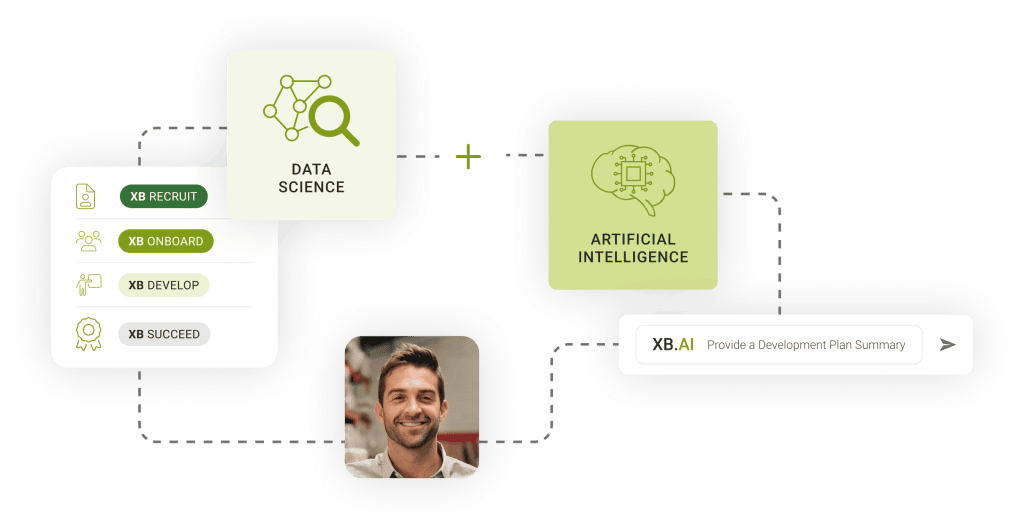
Artificial intelligence has expanded the ability to organize workforce data and surface meaningful patterns. When combined with decades of Industrial-Organizational Psychology research, organizations gain scientifically grounded insights into the cognitive abilities, behavioral competencies, and learning agility that drive long-term success.
The XBInsight AI + Science-Powered Talent Decision Platform connects hiring, onboarding, employee development, and succession planning into one continuous source of talent intelligence. Through solutions like XB Develop, organizations can personalize employee growth using role-specific assessments and tailored development recommendations, while XB Succeed helps leadership teams evaluate readiness, strengthen succession pipelines, and prepare critical roles with science-backed workforce insights.
Rather than treating talent decisions as isolated events, companies build a continuously evolving understanding of how their workforce is growing, adapting, and preparing for future opportunities. That connected approach helps leaders make more confident decisions while creating an organization that is better equipped to perform through change.
Prepare Your Workforce for What’s Next
Transformation doesn’t happen once. It becomes part of how successful organizations operate every day. Having the right talent intelligence allows leaders to identify adaptable employees earlier, invest in development more strategically, and build leadership pipelines that keep pace with changing business demands.
Schedule a personalized demo of the XBInsight AI +Science-Powered Talent Decision Platform to see how science-backed talent intelligence can help your business develop future-ready leaders, strengthen succession planning, and make smarter talent decisions across the entire employee lifecycle.