Organizations have more workforce data than ever before, yet many leadership teams still struggle to answer fundamental questions about their talent. Who is ready for greater responsibility? Which employees have the greatest long-term potential? Where are leadership gaps beginning to emerge? Those answers become difficult to find when hiring, onboarding, development, and succession planning each operate within separate systems that never connect.
As companies continue investing in new HR technology, many are discovering that adding more tools doesn’t automatically create better visibility. Future-ready businesses need connected talent intelligence that supports informed decisions throughout the employee lifecycle, not isolated snapshots collected at different points in time.
Fragmented Systems Create Fragmented Decisions
Most organizations didn’t intentionally build disconnected talent strategies. They adopted solutions to solve immediate business needs. Recruiting selected one assessment platform. Learning and development implemented another. Leadership development introduced additional evaluations, while succession planning evolved through spreadsheets, performance reviews, and annual discussions.
Each investment may provide value on its own, but together they often create an incomplete picture of the workforce.
A candidate who demonstrated exceptional problem-solving during hiring may begin onboarding with none of that information available to managers. Development plans are frequently built from fresh assessments instead of leveraging existing workforce intelligence. Years later, succession planning starts another evaluation process despite years of valuable employee data already existing elsewhere in the organization.
Every transition creates another data gap, making it harder for leaders to understand how employees have grown, adapted, and prepared for future opportunities.
High-Stakes Talent Decisions Require Context
Business leaders are accustomed to looking at multiple sources of information before making an important decision. Financial performance, operating costs, customer trends, and market conditions all provide different pieces of the picture. Workforce decisions benefit from that same level of context.
No single assessment or performance review can tell leaders everything they need to know about an employee’s potential. A more complete view considers multiple measurements, including cognitive capabilities, behavioral competencies, learning agility, motivators, and performance data. As those insights build over time, leaders gain a clearer understanding of an individual’s strengths, growth, and potential to take on greater responsibility.
That depth of insight gives organizations a stronger, more reliable foundation for making strategic workforce decisions with confidence.
Connected Talent Intelligence Reduces Organizational Risk
Every significant talent decision carries business consequences.
Hiring the wrong leader can delay strategic initiatives. Overlooking emerging talent creates unnecessary turnover. Promoting employees before they’re prepared affects productivity, engagement, and organizational confidence. Waiting until key leaders announce their retirement often forces businesses into reactive succession planning.
Organizations reduce those risks by replacing disconnected evaluation processes with continuous talent intelligence.
Connected talent intelligence gives leaders the ability to build on what they already know about their people. As employees grow and take on new challenges, additional data helps reveal how their capabilities, performance, and potential are developing. Managers and executives can use that broader view to make more informed decisions about career growth, leadership development, internal mobility, and future workforce needs.
Because those decisions draw from scientifically validated insights gathered over time, companies can take a more consistent approach to talent across the employee lifecycle.
High-Performance Systems Connect Every Stage of Development
Elite performance environments understand that development isn’t measured through isolated events.
The NFL offers a strong example. An official’s readiness isn’t determined by a single game or performance review. The league has the benefit of seeing how officials perform over time, including how they prepare, respond to coaching, interpret evolving rules, and handle the demands of the game. Together, those insights provide a more complete view of readiness for future assignments and continued progression.
Organizations can take a similar, readiness-focused approach to their own talent. Leadership potential develops over time as employees take on new challenges, build their capabilities, adapt, learn, and make increasingly complex decisions. When leaders can see that growth as part of a connected talent picture, they’re better equipped to identify potential and determine who may be ready for greater responsibility.
Get the Guide: See what NFL Officials teach us about confident leadership, and how XBInsight helps you build it in your leadership teams.
A Unified Platform Strengthens Every Talent Decision
Disconnected systems make it incredibly difficult for HR teams to turn workforce data into meaningful action. Valuable information is often spread across multiple platforms, creating more work for HR and making it harder for leaders to see the full picture when making critical talent decisions.
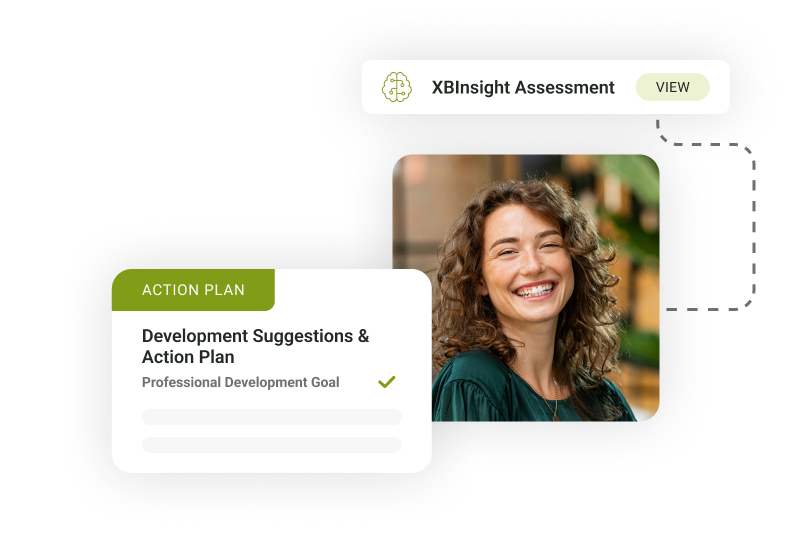
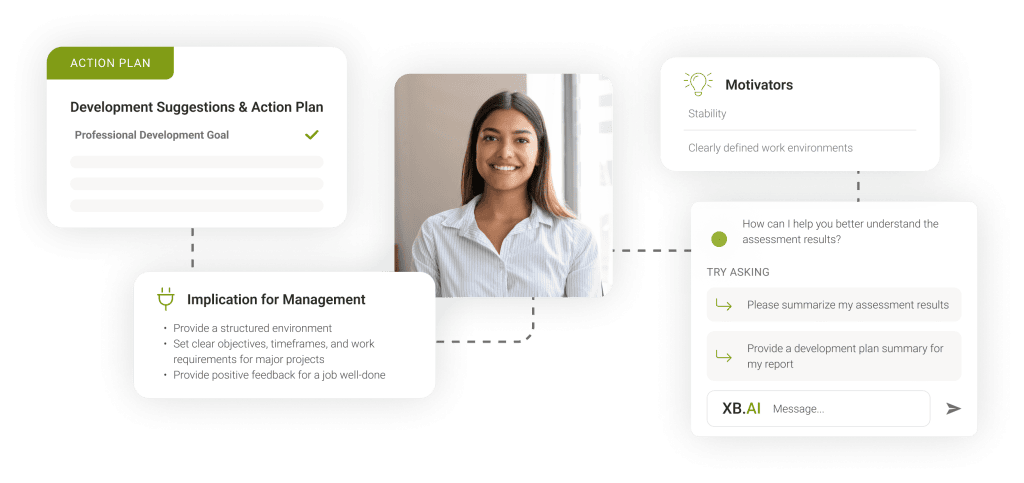
A unified talent intelligence platform brings that data together and allows insights to build throughout the employee lifecycle. Science-backed assessments establish a baseline during hiring that can continue informing decisions long after an employee joins the organization. Those insights can shape a more personalized onboarding experience, guide development as employees grow, and provide valuable context when leaders evaluate readiness for future roles and succession.
Building an Integrated Talent Strategy
The XBInsight AI + Science-Powered Talent Decision Platform was built to eliminate fragmented talent processes by connecting hiring, onboarding, employee development, and succession planning into one unified ecosystem. XB Recruit, XB Onboard, XB Develop, and XB Succeed work together to provide continuous, scientifically validated insight that helps companies identify potential, accelerate growth, strengthen leadership pipelines, and make more confident talent decisions throughout the employee lifecycle.
When every stage builds on the last, workforce intelligence becomes richer, leadership decisions become more objective, and organizations gain a clearer view of where their talent is today and where it’s capable of going tomorrow.
See the Complete Picture of Your Workforce
Disconnected assessments create blind spots that can affect hiring, development, retention, and succession planning. A unified approach gives leaders the connected insight needed to reduce talent risk and build a stronger, future-ready workforce.
Schedule a personalized demo of the XBInsight AI + Science-Powered Talent Decision Platform to get started.