Every NFL team knows one injury can change an entire season. Long before the first kickoff, coaches are evaluating depth, measuring players against role expectations, and collecting performance data across practices, games, and countless other moments that reveal who is ready when the opportunity comes. Every new observation strengthens the prediction.
Leadership succession follows the same principle. Readiness isn’t determined by a single assessment or annual review. Confidence grows as multiple measurements are collected throughout an employee’s journey, creating a richer, more predictive picture of leadership potential. Every new assessment strengthens that prediction, revealing who’s ready today, who’s developing toward future leadership roles, and where targeted development can create the greatest impact.
High-growth organizations are taking the same approach to leadership succession. Boards are asking for measurable bench strength, not assumptions about who might be ready next. They want continuous insight into leadership readiness across the employee lifecycle, giving them greater confidence in hiring, development, and succession decisions before critical roles become vacant.
When a CEO retires, a regional leader resigns, or growth creates new leadership opportunities, organizations don’t have time to start guessing. By then, the risk is already real. The stronger approach is to measure readiness continuously, identify leadership depth early, and build succession plans backed by predictive talent data.
That’s why succession planning has evolved beyond an annual HR exercise. It has become a strategic business priority, supported by connected talent intelligence that helps organizations measure readiness from hire to retire.
We’re speaking from experience. Read our NFL Case Study.
Why Boards Want More Than a Succession Chart
Succession planning used to revolve around identifying a few potential replacements for key leadership positions. An annual meeting, a spreadsheet, and a list of names were often considered enough.
Today’s boards expect much more.
Leadership transitions carry significant business risk. Losing a key executive can slow strategic initiatives, disrupt customer relationships, delay expansion plans, and create uncertainty throughout the organization. Even planned retirements can expose weaknesses if leadership readiness has never been measured objectively.
That has changed the conversation in boardrooms.
Instead of asking, “Who’s next?” leaders are asking:
- How deep is our leadership bench?
- Which critical roles have limited succession coverage?
- Who is ready today?
- Who could be ready with targeted development?
- Where are the gaps that could impact future growth?
Those questions can’t be answered with opinions alone. They require measurable talent data.
Bench Strength Should Be Measured, Not Assumed
Having names on a succession plan doesn’t necessarily mean an organization has leadership depth.
Imagine two senior directors being considered for the same executive role. Both have consistently strong performance reviews. Both are respected by their teams. Both have years of experience.
On paper, they look equally prepared. Objective assessment data may reveal something different.
One leader demonstrates exceptional decision-making, learning agility, and the ability to lead through ambiguity. The other performs exceptionally well within their current scope but has not yet demonstrated the competencies needed for enterprise-level leadership.
Without structured measurement, those differences often remain hidden until after the promotion has already been made. True bench strength isn’t simply identifying who could fill a role. It’s understanding who is prepared to succeed in it.
Why High-Growth Companies Measure Talent Beyond Hiring
Some businesses invest in assessments during hiring and never revisit that data once an employee joins the company.
High-growth organizations take a different approach.
In fact, high-growth organizations are 1.4 times more likely to use talent assessments throughout the employee lifecycle, giving leaders continuous insight into hiring success, onboarding needs, development opportunities, leadership readiness, and succession depth.
That matters because people evolve.
Employees gain experience. Responsibilities expand. New strengths emerge. Development needs change. Leadership potential becomes clearer over time.
Organizations that continue measuring talent gain a far more accurate picture of workforce readiness than organizations relying on annual performance reviews or manager observations alone.
Rather than making critical leadership decisions based on a single point in time, they build a living view of talent that evolves alongside the business.
Succession Starts Long Before a Leadership Vacancy
One of the biggest misconceptions about succession planning is that it begins when a leadership position opens.
In reality, succession starts the day an employee joins the company.
- Hiring determines role fit.
- Onboarding influences speed to productivity.
- Development builds leadership capability.
- Succession planning identifies who’s prepared for greater responsibility.
These are connected stages of the same talent journey.
When organizations measure talent continuously instead of treating each phase independently, they gain a much clearer understanding of who is growing, who is ready for additional responsibility, and where future leadership gaps may emerge.
Why Fragmented Talent Systems Create Blind Spots
Most already have workforce data. The problem is that it lives in different places. Hiring assessments may sit in one system. Performance reviews live somewhere else. Learning records exist in another platform. Succession plans are maintained in spreadsheets that are updated once or twice a year.
Each source provides valuable information, but none of them tells the complete story. Disconnected systems force leaders to assemble succession decisions from incomplete snapshots instead of connected insights. As organizations grow, those blind spots become increasingly difficult to manage.
Without a unified view of talent, it’s harder to identify emerging leaders, prioritize development investments, or understand whether the organization has the bench strength needed to support future growth.
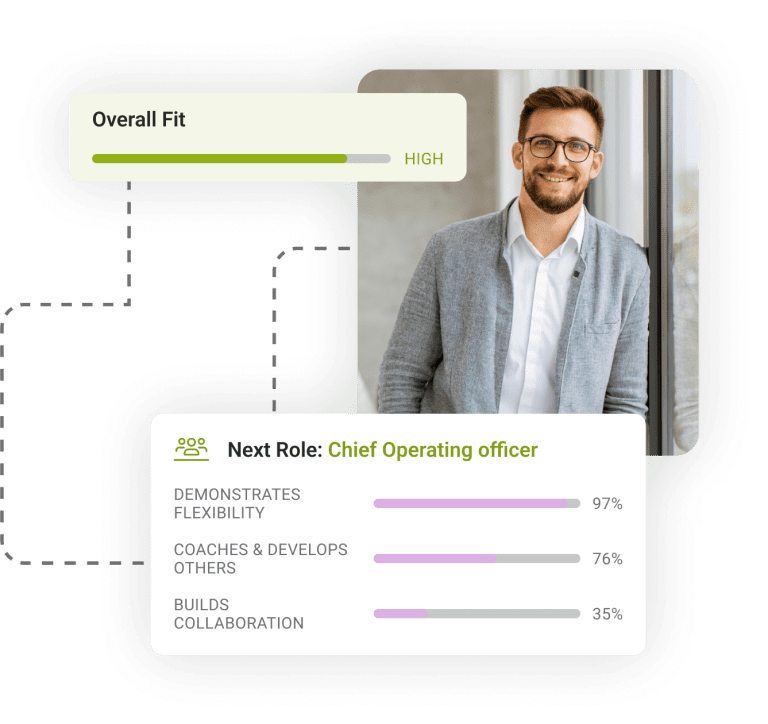
Readiness is only part of the succession equation. Leadership teams also need visibility into promotability, or the likelihood that someone can successfully perform at the next level. That prediction comes from measuring cognitive capability, behavioral competencies, learning agility, and demonstrated growth over time, creating a clearer picture of future leadership potential before a promotion decision is made.
A Unified Platform Creates Continuous Talent Intelligence
Every assessment adds another layer of evidence. Hiring insights inform onboarding. Onboarding guides development. Development strengthens succession planning. Over time, those connected measurements create a continuously evolving picture of each employee’s leadership potential.
That’s the advantage of the XBInsight AI + Science-Powered Talent Decision Platform. It connects talent intelligence across the employee lifecycle, giving leadership teams a stronger foundation for hiring, development, and succession decisions.
Rather than treating hiring, onboarding, development, and succession as separate processes, XBInsight creates a continuous flow of workforce intelligence from hire to retire.
Businesses can:
- Identify best-fit candidates through XBRecruit
- Personalize onboarding with XBOnboard
- Develop leadership capabilities through XBDevelop
- Measure leadership readiness and succession depth with XBSucceed
Because every stage builds on the one before it, leaders gain a consistent view of employee growth instead of disconnected data points.
The result is better visibility into bench strength, stronger succession planning, and greater confidence in future leadership decisions.
Predictive Talent Data Improves Every Leadership Decision
Performance history will always matter. But past performance alone doesn’t predict future success.
Leadership roles become increasingly complex as organizations grow. Decision-making, adaptability, learning agility, strategic thinking, and leadership judgment all become more important as responsibilities expand.
Predictive talent assessments provide a clearer picture of those competencies before a promotion takes place.
Instead of relying primarily on tenure, manager recommendations, or visibility within the organization, leaders can compare employees against scientifically validated, role-specific benchmarks that predict success in future positions.
That makes development investments more targeted, succession planning more objective, and leadership decisions more defensible.
Succession Planning Is Now a Continuous Business Strategy
Every organization will experience leadership change. The companies that navigate those transitions most successfully don’t wait until a vacancy appears. They continuously measure leadership readiness, strengthen their bench, and use predictive data to guide every stage of the employee lifecycle.
That’s why succession planning has evolved beyond an annual HR exercise. It’s become an ongoing business strategy supported by connected talent intelligence.
By combining AI-powered insights with scientifically validated assessments, organizations gain a clearer understanding of who is ready today, who is developing for tomorrow, and where future leadership risk exists before it impacts the business.
From hire to retire, continuous talent measurement helps organizations build stronger leaders, deeper benches, and more confident succession decisions. Ready to gain greater visibility into your talent data? Request your free demo.